Skip to content
A high-quality N2O tank is only as good as the regulator attached to it.
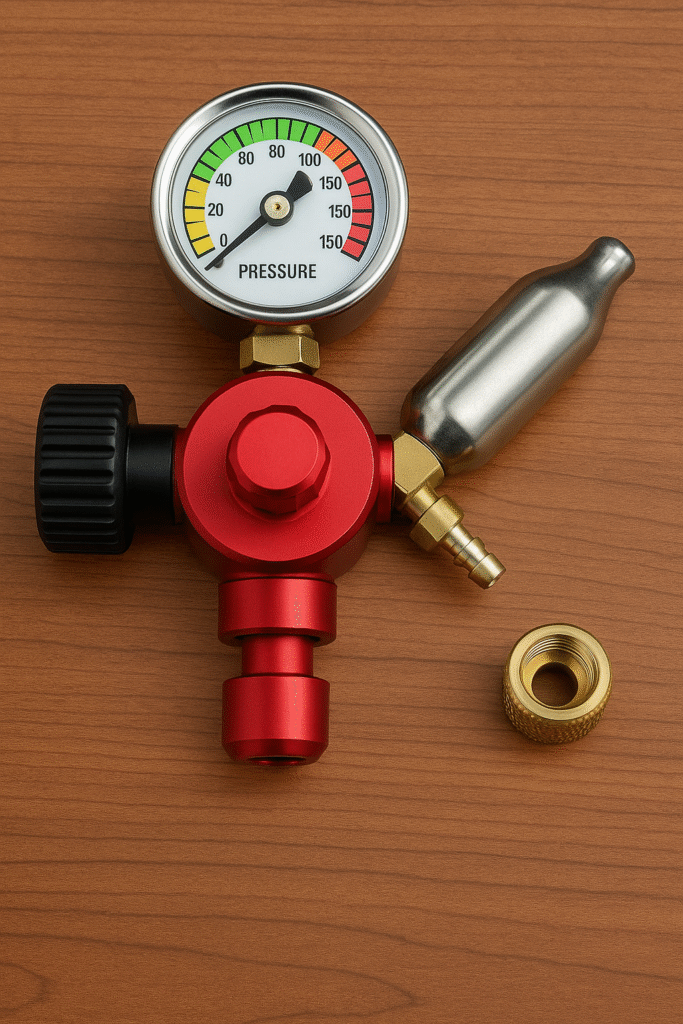
If your cream charger regulator leaks, sticks, or over-pressurizes, it won’t matter how pure the gas is—you’ll get angry customers, wasted product, or even damaged dispensers.
As a factory supplying both tanks and compatible accessories, I’ve tested and shipped thousands of regulators to clients in Australia, Germany, and the Middle East. This article shares how to identify a good cream charger regulator —and what to avoid when buying in bulk or launching your own brand.
1. Why Regulators Matter in the First Place
Tanks above 580g (like 640g or 3.3L) contain gas under high pressure—up to 120 bar when full. You can’t just “open the valve” like a water tap.
A regulator:
- Controls the gas flow into the dispenser
- Prevents overcharging or bursting
- Improves foam consistency
- Ensures safety and repeatable dosing
📌 Without a regulator, you risk equipment failure and user injury.
2. Feature #1: Adjustable Pressure Control
Cheap regulators are “on-off” types. Better models let the user set output pressure.
✅ Look for:
- Dial or screw-type adjustment
- Pressure range: 0–20 bar (recommended for 640g tanks)
- Click-stop safety or anti-slip grip
💡 Why it matters: Different recipes and dispensers need different pressures. A barista may use 8 bar; a dessert chef may need 12.
3. Feature #2: Pressure Gauge with Clear Markings
A regulator without a visible gauge is risky—you can’t monitor the output or tank pressure.
✅ Gauge features to check:
- Dual readout (PSI + bar)
- Color zones (green = safe, red = danger)
- Anti-fog window or rubber protector
- Placement facing upward (not behind the hose)
📌 Pro buyers prefer steel-rimmed gauges with tamper-proof covers—especially in hot or humid regions.
4. Feature #3: Food-Grade Seals and Anti-Leak Design
Gas leakage is one of the top complaints in cream charger accessories.
✅ Must-haves:
- Food-grade silicone or nitrile (NBR) gaskets
- Teflon-wrapped thread points
- Brass or stainless steel internal valves (avoid cheap plastic cores)
🧠 At nitronovae, our regulators pass 100% leak tests before shipping. We also include extra gasket sets with each OEM order.
5. Feature #4: Compatible Threads and Secure Locking
Not all regulators fit all tank valves. Thread type must match your gas cylinder.
| Valve Type | Thread Spec | Common Use |
| M11 x 1 | Most 640g steel tanks | EU standard |
| G1/4 | Some 3.3L or aluminum tanks | Asia / Australia |
| UNF 5/8 | US-market custom | Check adapter |
✅ A good regulator should:
- Lock without cross-threading
- Have knurled grip for easy tightening
- Include optional adapter kit (M11 → G1/4)
6. Feature #5: Ergonomic Hose and Nozzle Connector
Regulators usually come with a pressure hose. But many hoses:
- Kink or twist under pressure
- Leak at the fitting
- Don’t match dispenser nozzle
✅ Ideal hose system:
- Food-safe reinforced rubber or PU
- 1.5m–2m in length
- 3-click nozzle lock or spring clip system
- Color-coded for brand matching
📌 We offer red, black, blue hoses to match flavored tank caps and reinforce brand identity.
7. Bonus: What to Offer in a Complete OEM Regulator Kit
Want to upsell regulators or bundle them with your OEM brand?
🎯 Add:
- Zipper bag or printed box
- Extra gasket kit
- Instruction card (multi-language)
- QR code link to usage video
💡 Tip: If you sell flavored tanks, offer matching color regulators with caps or hoses.
Conclusion
A regulator may be “just an accessory”—but for your brand, it’s part of the total experience. By choosing a high-quality cream charger regulator, you reduce returns, enhance user safety, and increase your average order value.
At nitronovae, we manufacture and test regulators alongside our tanks. Every unit is pressure-checked and OEM-ready—with color and packaging options to match your market.
👉 Want to request regulator samples or customize a complete accessory bundle? Get in touch here →