Skip to content
I’ll never forget this shipment. 8640 units of 640g cream chargers, fully packed, branded, and sailing toward Europe. The client was excited—it was their first full container under their own brand. But two weeks later, I got an email no one wants to receive:
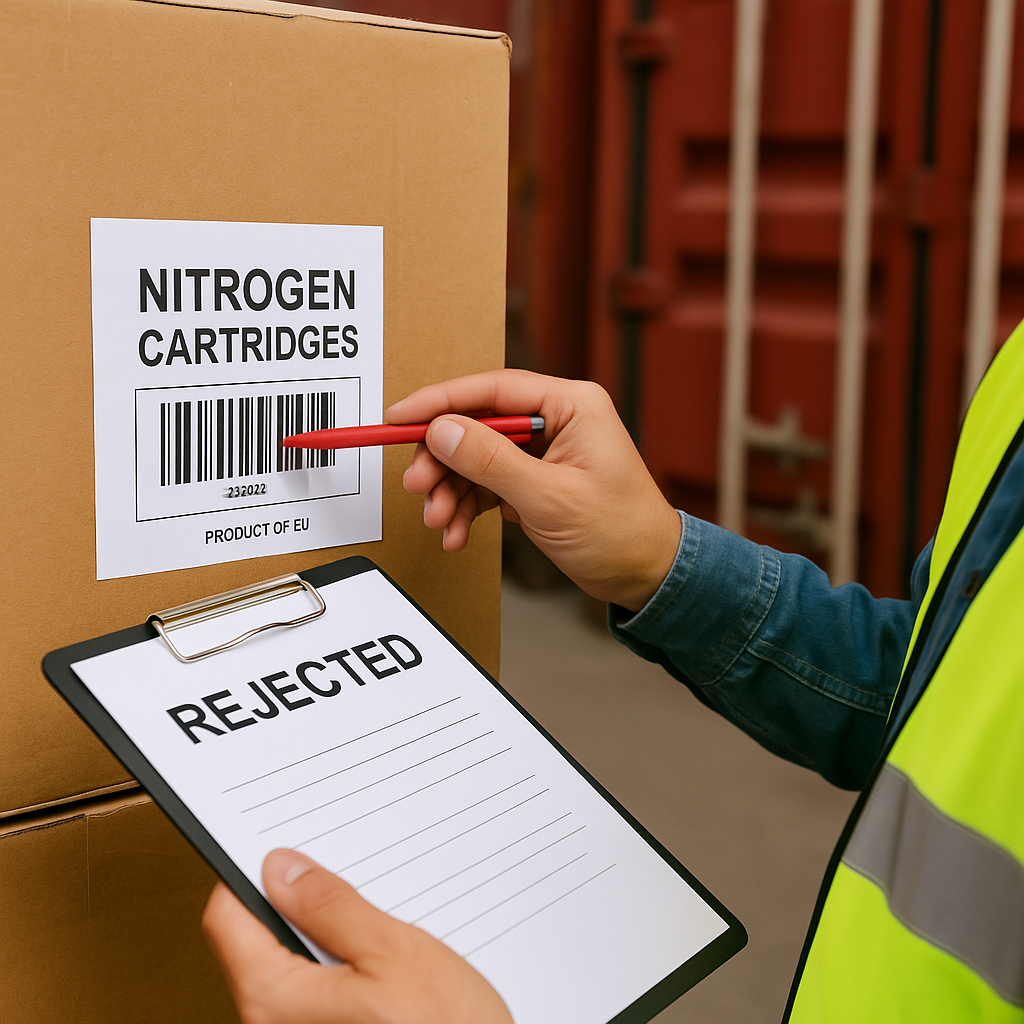
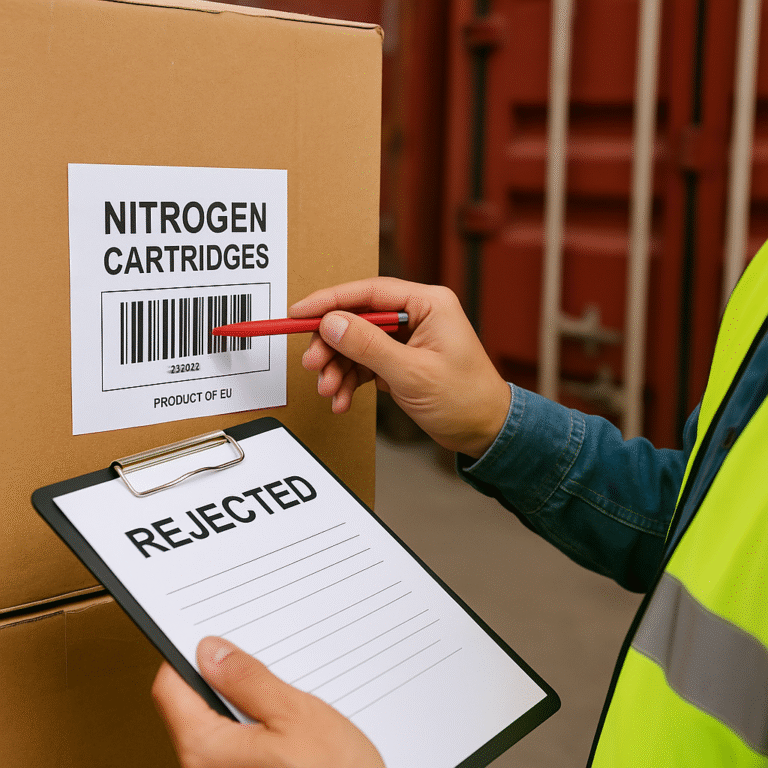
“The port authority flagged the shipment. Labels don’t meet TPED declaration. Container held. What now?”
Let me walk you through what went wrong—and how you can avoid the same (very expensive) mistake.
1. It Wasn’t a Gas Problem—It Was a Text Problem
The tanks were perfect:
- TPED certified
- Correct pressure rating
- Batch code engraved
- Safe valve thread and cap
But the label was missing one key element: the correct positioning of the π mark (TPED symbol) and Notified Body number.
Instead of showing:
π 0035 – Transportable Pressure Equipment (TPED) UN 1070 – NITROUS OXIDE CE, Batch code, Net weight
…the designer had placed:
“For food use only” in bold A generic CE logo in the top corner And π 0035 in small, faint text on the back of the tank
That tiny misplacement? It cost the client two weeks in port detention, €3,000 in storage fees, and a huge blow to their first launch momentum.
2. Customs Isn’t Looking at Your Logo—They’re Checking Compliance Blocks
When customs in Europe (especially Germany, Netherlands, or France) inspect cream chargers, they don’t care how nice your box looks. They look for:
- The UN number (e.g., UN1070 for N2O)
- The pressure and net weight
- The π mark with notified body
- The batch traceability code
- The hazard pictogram (if required)
- The language matching the import port
Designers often don’t know this. And if you’re doing your own labels through Fiverr, Canva, or a local print shop, you’re almost guaranteed to miss something.
3. How to Label a 640g or 3.3L Cream Charger Properly
Here’s the minimum legal label block we apply for EU clients:
NITROUS OXIDE UN1070 – 640g Net Weight
TPED: π 0035
CE Certified / Food-Grade
Batch No: 2025.10.BK01
Valve: M11 x 1 / Max pressure: 180 bar
Warning: Store below 50°C / Do not inhale
For foodservice use only
Made in China
Some ports also require:
- Language translation (NL, DE, FR)
- QR code for digital certificate
- Anti-abuse disclaimer
- Importer’s address (if direct to store)
4. What We Did to Resolve the Rejected Container
We worked fast:
- Printed compliant stickers in Europe
- Hired an on-site relabel team in the destination warehouse
- Issued a declaration of correction with updated label design
- Provided TPED certificate + Notified Body letter for customs
It cost the client time and money—but it saved the stock.
✅ Never let a graphic designer make your labels alone → Send them our compliance checklist first
✅ Always get labels approved before mass production → We offer free label review service for OEM clients
✅ Treat tank labels like passports, not marketing posters → They get your shipment across borders
✅ Design for your market—not just for your logo → DE port? Use German warning. NL? Show π clearly. Middle East? Add Arabic side label.
Conclusion
That single labeling mistake nearly destroyed a client’s launch. It wasn’t about quality. It wasn’t about price. It was about a missing symbol.
Don’t let poor label planning ruin your shipment. I’ve seen what happens when ports reject gas cargo—and I’ve seen how easy it is to avoid with a checklist and a 15-minute label review.