Skip to content
If you stay in the cream charger industry long enough, you will notice something strange.
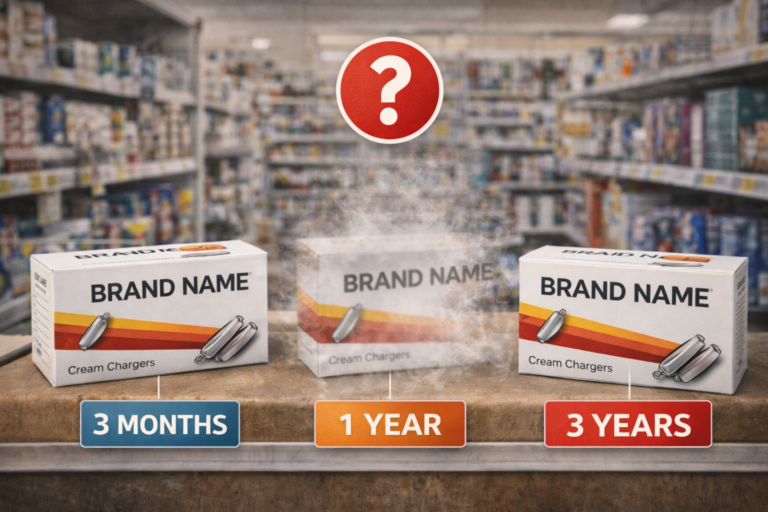
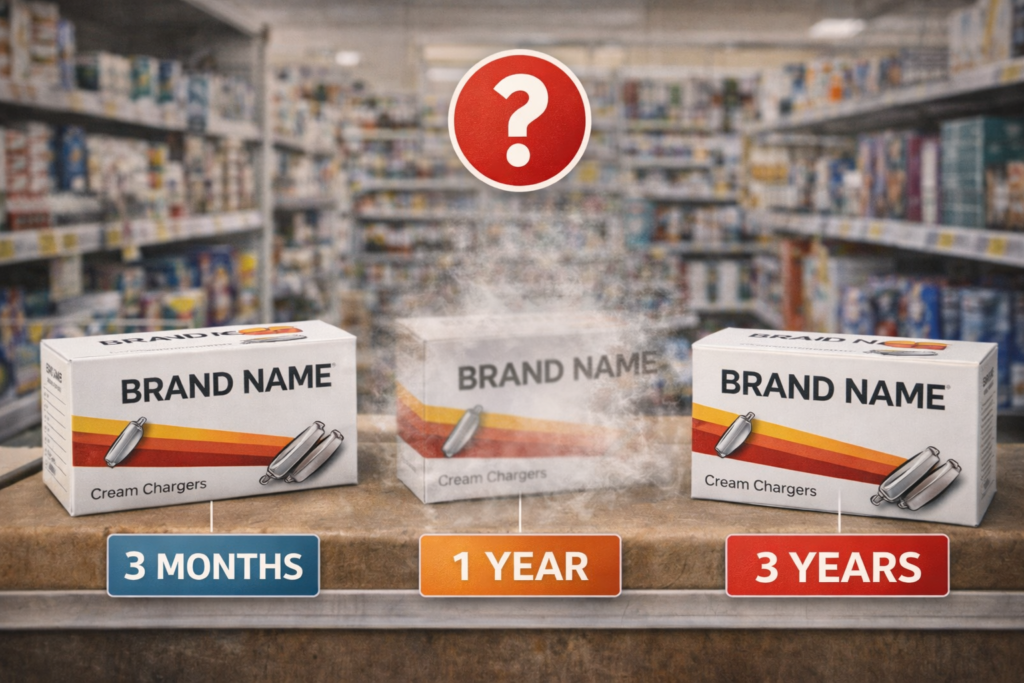
Some brands appear very quickly. They launch attractive packaging, competitive prices, and aggressive marketing. For a year or two, they seem to be everywhere. Then suddenly, they disappear.
As a manufacturer who has worked with distributors and brand owners for many years, I have seen this cycle repeat many times. Most of the time, the reason is not marketing or product demand. The real reason usually sits deeper in the supply chain.
Understanding why brands disappear can actually help new buyers avoid the same mistakes.
TL;DR
From a factory perspective, cream charger brands usually disappear because of these three issues:
- Unstable supply chains
- Compliance and transportation problems
- Poor quality control that leads to distributor complaints
Price competition alone rarely destroys a brand. Operational problems usually do.
The Supply Chain Problem Most New Brands Underestimate
One thing many new brand owners underestimate is how complicated the supply chain can be.
A cream charger product may look simple, but the production process involves several critical steps:
| Stage | Key Risk |
|---|---|
| Steel cylinder forming | Material thickness consistency |
| Gas filling | Weight accuracy and purity |
| Valve sealing | Leak prevention |
| Packaging | Transport protection |
| Dangerous goods shipping | Compliance documentation |
Each of these steps must work smoothly. If one step fails, the entire shipment can be delayed or rejected.
Many new brands focus heavily on packaging design and marketing, but they spend very little time studying the logistics rules that apply to compressed gas products. Importers who understand the transport rules described in the UN dangerous goods transport classification system usually avoid many early mistakes.
Quality Problems Spread Faster Than Marketing
Another reason some brands disappear quickly is quality instability.
In this industry, distributors pay very close attention to return rates. If even a small percentage of chargers leak or fail to dispense properly, the issue spreads quickly through the market.
From our experience, distributors start worrying when return rates exceed about 0.3% of a shipment. At that point, retailers begin to lose confidence in the brand.
Inside our factory, several steps exist specifically to prevent that situation:
| Inspection Stage | What We Check |
|---|---|
| Gas filling control | Weight tolerance within strict limits |
| Valve torque testing | Sealing consistency |
| Leak detection | Pressure holding tests |
| Batch traceability | Tracking each production run |
Distributors often want to understand these inspection procedures before scaling their orders. Many buyers also review our cream charger production and quality control overview to understand how we maintain consistent production across different batches.
Compliance Problems Can Stop a Brand Overnight
Another issue that surprises many new importers is how strict gas product regulations can be.
Cream chargers are classified as dangerous goods during transportation, which means shipping documentation, labeling, and packaging must follow international standards.
If a shipment is missing correct markings or certification, customs clearance can stop immediately. That kind of delay can cause major financial pressure for new brands that rely on fast inventory turnover.
This is why experienced buyers usually ask detailed questions about compliance documentation before placing large orders.
Cash Flow Is the Hidden Risk
One more factor that often destroys young brands is cash flow.
Because dangerous goods shipping requires special handling, logistics costs can fluctuate significantly. If a company underestimates transportation costs or inventory cycles, the financial pressure can grow very quickly.
Brands that survive long-term usually manage three things well:
- Reliable suppliers
- Stable logistics planning
- Controlled inventory expansion
When those three factors stay balanced, the business becomes much more stable.
What Successful Brands Do Differently
The brands that last in this industry usually follow a different strategy.
Instead of chasing the lowest possible price, they focus on building a stable supply system. They work closely with manufacturers, check production procedures carefully, and prioritize reliability over short-term savings.
Over time, that approach creates trust with distributors and retailers.
And in the cream charger market, trust is often the factor that determines which brands survive and which brands disappear.
Final Thoughts
If you are launching or sourcing cream chargers for distribution, the most important question is not “Who offers the lowest price?”
The better question is:
“Who can supply consistently for the next three years?”
Because in this industry, brands rarely disappear because of marketing problems. They disappear because their supply system cannot support long-term growth.
From the factory side, the difference between those two outcomes is usually very clear.